Ketamine for C-PTSD offers new hope for people living with deep or long-term trauma. Unlike regular therapy, this treatment works in the brain to help reset stress and fear responses. Additionally, it can bring faster relief and help people feel calmer and connected. Meanwhile, studies show ketamine may lift mood, ease anxiety, and help the brain grow new pathways. As a result, many people who have struggled for years with complex trauma are finding a new way to heal and feel more balanced.
What Is C-PTSD?
Complex Post-Traumatic Stress Disorder, or C-PTSD, happens after long or repeated trauma. It can come from things like childhood abuse, neglect, or ongoing violence. According to a study done by PubMed, “Complex post-traumatic stress disorder (CPTSD) is characterised by three core post-traumatic symptom clusters, along with chronic and pervasive disturbances in emotion regulation, identity, and relationships.”
Unlike PTSD, which often comes from one major event, C-PTSD builds slowly over time. People with C-PTSD may have flashbacks, bad dreams, or trouble controlling emotions. Additionally, they might feel guilt, shame, or have trouble trusting others. As a result, it can lead to anxiety, sadness, or feeling disconnected from the world. Over time, these feelings can make daily life hard. However, learning about C-PTSD is the first step to healing. With therapy, support, and treatments like ketamine, recovery is possible.
Symptoms of C-PTSD
People with C-PTSD may experience many emotional and physical symptoms. However, these can change over time and vary in strength. Below are some of the most common:
- Flashbacks or nightmares that make the person relive the trauma
- Avoiding people, places, or memories that bring up painful feelings
- Feeling on edge or easily startled, even in safe situations
- Strong emotions such as anger, fear, or sadness that feel hard to control
- Negative self-image or feeling unworthy and full of guilt or shame
- Trouble trusting others or feeling distant from family and friends
- Emotional numbness or feeling disconnected from life
- Difficulty sleeping or concentrating due to constant stress or racing thoughts
Overall, these symptoms can make daily life challenging but can improve with the right care.
What Is Ketamine Therapy?
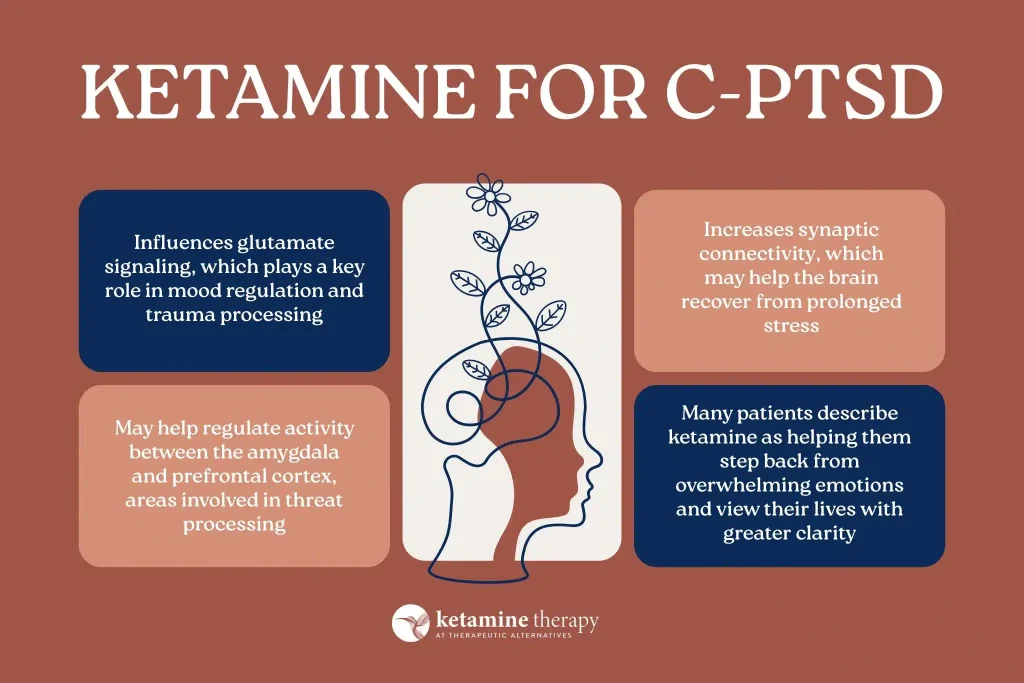
Ketamine helps treat C-PTSD by calming the brain and repairing areas hurt by trauma. In people with C-PTSD, parts of the brain that control fear and emotion stay stuck in survival mode. Additionally, trauma can make it hard for the brain to feel safe or think clearly. Ketamine works on the glutamate system to restore balance and help the brain relax. Meanwhile, it helps the brain grow new, healthy connections, a process called neuroplasticity. As a result, ketamine for C-PTSD can reduce flashbacks, fear, and emotional numbness. It also helps people feel more grounded and ready to heal through therapy.
Benefits of Ketamine for C-PTSD
Ketamine can help people with Complex PTSD feel calmer, more balanced, and ready to heal. Some of the main benefits include:
- Fewer flashbacks and nightmares by calming the brain
- Less fear and anxiety connected to past trauma
- Better mood by helping brain chemicals work normally again
- Improved brain healing through new, healthy connections
- More emotional control and less stress
- Better results from therapy by helping patients feel more open
- Faster relief than many other trauma treatments
- Less emotional numbness and more connection to feelings
- Lower body tension and fewer “on edge” moments
- More hope and energy for long-term healing
Ketamine vs. Traditional Treatments for C-PTSD
Here’s how ketamine compares to common treatment methods for Complex PTSD:
- Talk Therapy (Cognitive or Trauma-Focused)
- Helps patients process painful memories and learn coping skills.
- Can take months or years to show major changes.
- Often limited when emotions or fear responses are too strong to talk through.
- EMDR (Eye Movement Desensitization and Reprocessing)
- Uses guided eye movements to reprocess traumatic memories.
- Can reduce distress but may bring up intense emotions during sessions.
- Requires multiple visits and may not work for everyone.
- SSRIs and Other Medications
- Work by changing serotonin levels to improve mood and lower anxiety.
- May take weeks to work and often manage symptoms rather than heal the cause.
- Can cause side effects or stop working over time.
- Ketamine Therapy
- Acts on the glutamate system, helping the brain “reset.”
- Promotes fast relief, often within hours or days.
- Boosts neuroplasticity, making therapy more effective and healing longer-lasting.
What to Expect During Ketamine Treatment
During ketamine treatment, patients relax in a calm, comfortable room. Next, the medicine is administered through an IV or IM injection and typically lasts approximately 40-60 minutes. Additionally, most people wear an eye mask, wrap up in a blanket, and listen to a calming playlist during the session. This helps the body and mind fully relax while the medicine takes effect. Meanwhile, medical staff stay close by to make sure everything feels safe and smooth. Some people feel light, dreamy, or peaceful as the brain begins to reset. As a result, many leave feeling calmer, more open, and less weighed down by stress. With continuous treatments, many patients report feeling “less triggered” by stressors and more hopeful about life.
Ketamine for C-PTSD Q and A
How is C-PTSD different from PTSD?
C-PTSD comes from long-term or repeated trauma, while PTSD usually develops after one major event. Additionally, C-PTSD often affects self-esteem, trust, and emotions more deeply. People with C-PTSD may feel shame, guilt, or have trouble forming healthy relationships.
What is the best treatment for complex PTSD?
There isn’t one “best” treatment, but a mix of therapy, emotional support, and sometimes medication works well. In many cases, trauma-focused therapy, EMDR, or ketamine therapy can help reduce symptoms and support healing.
What are some alternatives to antidepressants for C-PTSD?
Is ketamine therapy effective for people with long-term trauma?
How quickly does ketamine work for C-PTSD?
Many people notice changes within hours or a few days after treatment. However, lasting results usually come after several sessions and continued therapy.
What are the risks or side effects of ketamine for trauma?
Some people may feel dizzy, tired, or slightly detached during or after a session. Fortunately, these effects usually fade within an hour. Serious side effects are rare when treatment is done under medical care.
How many ketamine sessions are needed to see results?
Most people start with six sessions over two to three weeks. After that, booster sessions may be added every few weeks or months, depending on symptoms.
Is ketamine covered by insurance for C-PTSD?
Most insurance plans do not yet cover ketamine for C-PTSD. However, some clinics offer payment plans or can provide documentation for possible reimbursement.
Can ketamine be combined with EMDR or therapy?
Yes, many people combine ketamine with EMDR or talk therapy. In fact, ketamine can make it easier to open up and process trauma during therapy sessions.
Is ketamine a permanent solution or will symptoms return?
Ketamine is not a cure, but it can lead to lasting improvement. Over time, symptoms may return if stress or trauma triggers appear, but follow-up treatments and therapy can help maintain progress.
Ketamine for C-PTSD Cost
In the U.S., the cost for ketamine therapy for C-PTSD can vary a lot. On average, many clinics in the U.S. charge between $400 and $800 per session for a ketamine treatment. In Utah, some providers advertise sessions at $300-$600, making it somewhat more affordable locally than the national high end. Because this treatment for C-PTSD is often considered “off-label,” many insurance plans don’t cover it, so most people pay out of pocket. Additionally, the total cost depends on the number of sessions required. However, some clinics offer payment plans or discounts to help patients manage the cost.
Ketamine Therapy at Therapeutic Alternatives is proud to provide one of the most affordable prices for ketamine in Utah. Additionally, we have discounts for new clients, first responders, and those purchasing a package of 6 or more.
Ketamine for C-PTSD Near Me | Utah’s Best Ketamine Clinic
If you’re searching for “ketamine for C-PTSD near me” in Utah, Ketamine Therapy at Therapeutic Alternatives offers a calm, welcoming space for healing. This ketamine clinic in Utah provides private treatment rooms designed for comfort, safety, and relaxation. Additionally, the team specializes in helping people with complex trauma by using low-dose ketamine to help the brain form new, healthy connections. Meanwhile, sessions are guided by trained professionals who focus on emotional support and careful monitoring throughout each treatment. The clinic’s commitment to providing safe care in a non-clinical, peaceful setting helps patients feel at ease and supported throughout their entire experience. As a result, many find this a trusted place to begin healing and recovery from C-PTSD. For more information about ketamine for C-PTSD, call 385-685-1410 or fill out an online form.